Climbing vs. Floor Space: Optimizing Your Tank Layout for Gecko Enrichment
The Gecko Landlord's Dilemma: Sky-High Penthouse or Ground-Floor Studio?
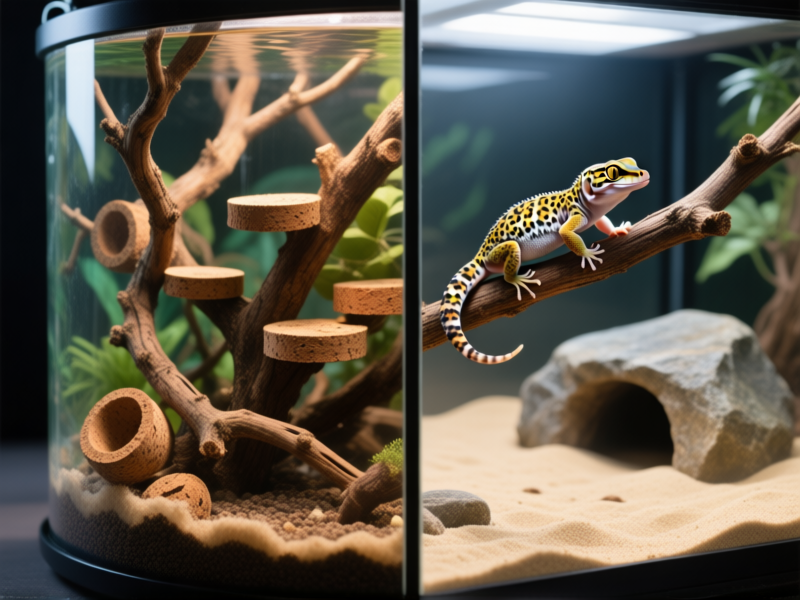
So you're staring at that empty tank. You've got the heat mat, the thermostat, the hides. Now for the fun part: the furniture. And here's where everyone gets stuck. Do you build your leo a lizard skyscraper, full of branches and ledges? Or do you keep it minimalist, giving them a huge, open floor to patrol? The pet store blogs scream "CLIMBING IS ENRICHMENT!" (which, yeah, it is). But your gecko's natural vibe? More desert floor than jungle canopy. Let's clear the air. This isn't a battle. It's a balancing act. Getting it wrong means wasted space and a bored lizard. Getting it right? That's how you create a home, not just a box.
Why Your Tank Floor Isn't Just Empty Real Estate
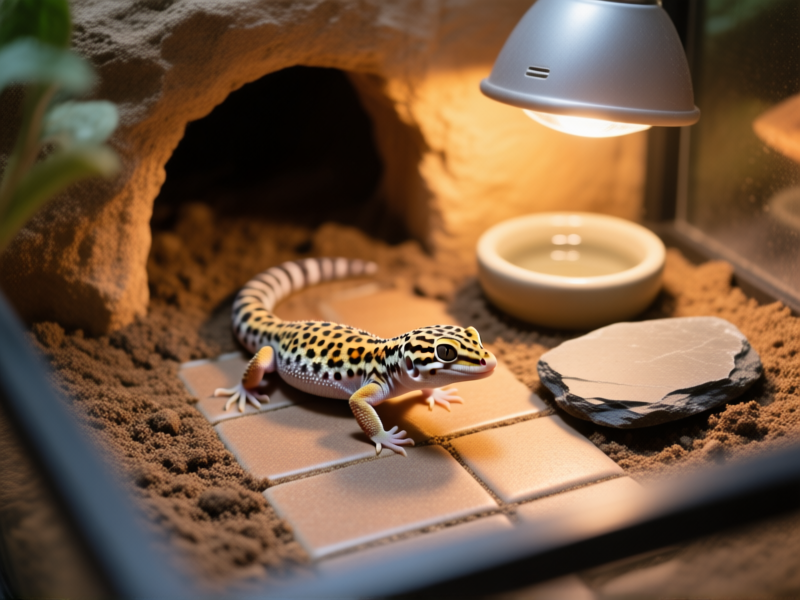
Okay, hold up on ordering that 3-foot-tall jungle gym. Your gecko needs to eat, drink, poop, and thermoregulate. All that happens on the ground. Cramming the floor with junk means they can't find their warm hide when they're cold. Or they're constantly tripping over decorations trying to get to the humid hide. A cluttered floor is stressful. Actually, think of the floor as their highway system, their kitchen, and their bathroom. You need clear routes between the key zones: hot hide, cool hide, humid hide, food dish, basking spot. If they have to be a tiny parkour master just to get a drink, you've messed up. Floor space is functional space. Non-negotiable.
The Surprising Truth About Leopard Geckos & Climbing
Here's the thing. They *do* climb. Not like a crestie, obviously. But in the wild, they'll scramble over rocks, low brush, and into shallow crevices. They're not arboreal, but they're not purely flatlanders either. Offering some low-level climbing isn't just "fun." It's muscle tone. It's mental stimulation. It gives them a different perspective (literally) on their territory. The key word is *accessible*. A steep, slippery branch headed for the stars? Useless and dangerous. A gently sloped piece of cork bark, a stack of stable slate pieces, a sturdy, low branch? Now we're talking. It's not about height. It's about creating interesting pathways *above* the essential floor highway.
Building Up Without Sacrificing Prime Floor Space
This is the magic trick. You use the walls and the corners. That's dead space anyway. A quality 3D background with built-in shelves and cubbies? That's free climbing real estate that doesn't touch the floor. Securing a wide, flat piece of wood or cork to the back wall creates a sky-bridge. You can place hides on different "levels" of a stable rock structure. The goal is to create a *layered* habitat. The ground floor for business. The mezzanine level for lounging and exploring. By building vertically *at the sides and back*, you protect that crucial central floor zone. It makes the tank feel huge to them.
Your Practical Blueprint: The Hybrid Habitat
Forget "climbing vs. floor." Think "climbing *and* floor." Start with the non-negotiables on the ground. Map out your heat gradient. Place your three hides. Put the water dish in the cool end. Now, look at the layout. Where are the natural traffic lanes? Along the front glass, usually. Don't block those. Look at the back corners. That's where you build your low-rise climbing complex. A piece of driftwood leaning from a back corner to the middle. A stack of flat stones creating steps up to a secure ledge hide. Use heavy, flat-based decorations so nothing can tip. The final test? Watch your gecko. If they use the climbable features voluntarily, you win. If they ignore them or seem hesitant, it's too steep or unsteady. Tweak it.
Enrichment Isn't a Product, It's a Layout
At the end of the day, "enrichment" is just a fancy word for giving your pet choices. A boring tank gives them one path. A smart layout gives them options. The choice to thermoregulate on the warm flat stone or in the warm hide. The choice to hide in the ground-level humid hide or the elevated dry hide. The choice to walk the perimeter or take the scenic route over the bridge. That's what keeps their brain active. It prevents the glass-surfing, the repetitive pacing. You're not just filling space. You're building a little world with multiple solutions to the question, "What do I want to do right now?" And when you see them curled up on their personal lookout, surveying their kingdom, you'll know you nailed it.